| 2. HIV / AIDS: The extent of the HIV/AIDS epidemic |
| |
|
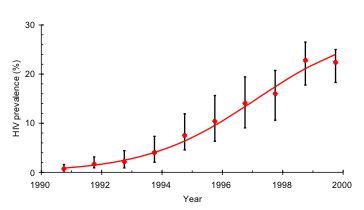
Although the HIV/AIDS epidemic reached southern Africa later than in West and East Africa, the growth in the region has been described as explosive. In South Africa, the HIV seroprevalence among antenatal clinic attendees has risen from 0.76% in 1990 to 10.44% in 1995 to 22.4% in 1999 (figure 1). It is estimated that there are now 4.7 million HIV infected people in South Africa, more than any other country in the world. In seven African countries, all in the southern region, at least one in five adults is infected with HIV and in Botswana over 35% of adults are now infected.
|
| |
|
Figure 1: Increase in National HIV antenatal clinic prevalence from 1990
to 1999 (Data fitted to a logistic curve. Adapted from Williams et.al. 2000)
|
|
| |
|
ING Baring (2000) forecast that HIV infection rates in South Africa will peak at about 17% by 2006 and AIDS deaths will peak about 5 years later at 256 AIDS deaths per 100 normal deaths.
|
| |
|
In spite of the dire situation that exists in southern Africa there are also glimmers of hope. In Uganda adult prevalence levels of HIV have fallen from a high of 14% in the early 1990s to around 8% by 2000 and there are now convincing signs that prevalence levels may be decreasing in Zambia.
|